-
-
-
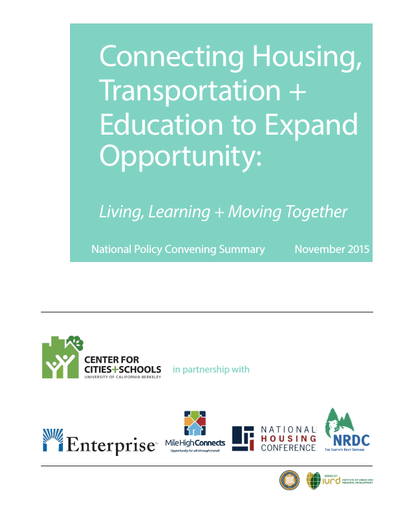
Connecting Housing, Transportation + Education to Expand Opportunity: Living, Learning + Moving Together
In many parts of the country it is difficult for families, particularly low- or moderate- income families to afford a suitable home in a transit-rich neighborhood with good schools. This report synthesizes the ideas and policy recommendations from a national convening of local, state, and federal stakeholders from across the country on innovative policy and…
-
-
-
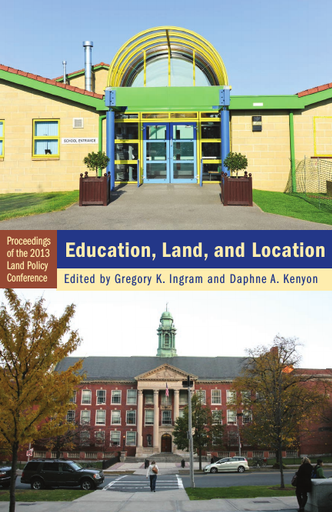
Beyond “Accidents of Geography”: Using Housing Policy to Improve Access to Quality Education
The chapters in this volume explore the links between education, location, and land based on the proceedings of the 8th Annual Land Policy Conference of the Lincoln Institute of Land Policy. Three policy outcomes are the focus: academic achievement of schoolchildren; racial, ethnic, and socioeconomic segregation; and equality of opportunity, all of which have broad…
-
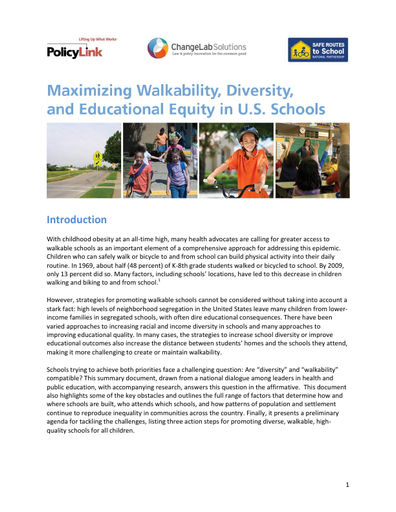
Maximizing Walkability, Diversity, and Educational Equity in U.S. Schools
Schools trying to be integrated and serve their local communities often face a challenging question: Are “diversity” and “walkability” compatible? This summary document, drawn from a national dialogue among leaders in health and public education, with accompanying research, answers this question in the affirmative. The report highlights key obstacles and outlines the full range of factors that…
-
Framing the Connections: Integrating Housing, Transportation, and Education in City and Regional Planning
In this chapter, we describe efforts to connect efforts to improve public education to housing and transportation planning initiatives, particularly through collaborative city-school-regional partnerships. The chapter appears in the 2011 report, “Finding Common Ground: Coordinating Housing and Education Policy to Promote Integration.by the Poverty and Race Research Action Council (PRRAC) and the National Coalition on…
-
Opportunity-Rich Schools and Sustainable Communities: Seven Steps to Align High-Quality Education with Innovations in City and Metropolitan Planning and Development
In 2010 the What Works Collaborative invited CC&S to examine the ways in which sustainable community planning could work with school leaders to foster positive educational outcomes. The report illustrates policies and strategies at all levels of government are increasingly associating educational outcomes with community planning and housing. Challenges remain for local officials and practitioners trying…
-
Monitoring Success in Choice Neighborhoods: A Proposed Approach to Performance Measurement
This paper considers how to effectively evaluate outcomes and measure success in comprehensive community transformation efforts, such as the U.S. Department of Housing and Urban Development (HUD)’s proposed Choice Neighborhoods Initiative. It is a product of the Urban Institute and was supported by the What Works Collaborative.
-
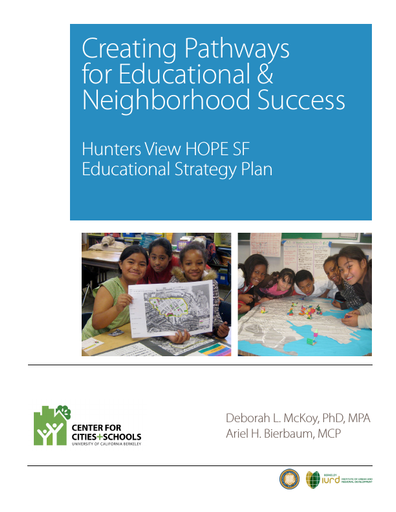
Creating Pathways for Educational and Neighborhood Success: Hunters View HOPE SF Educational Strategy Plan
The HOPE SF Housing & Education strategic planning study investigates how to meaningfully integrate public education into the revitalization of the Bayview Hunters Point neighborhood. The study provides an overall understanding of the current educational landscape at Hunters View; highlights opportunities to maximize resources and outcomes for all residents and families; and assists in creating…
-
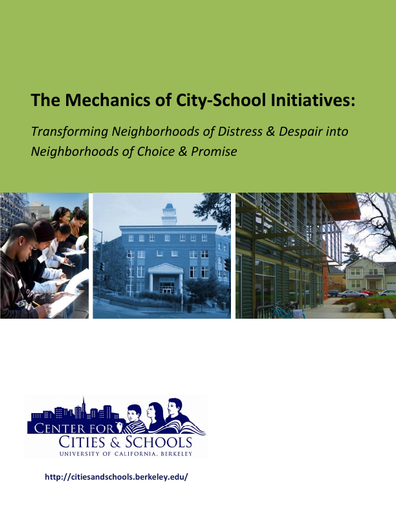
The Mechanics of City-School Initiatives: Transforming Neighborhoods of Distress & Despair into Neighborhoods of Choice & Promise
This brief introduces HUD and others to CC&S’s 10 PLUS Mechanics of Change, an evidence-based framework for building healthy, equitable and sustainable communities through integrated city-public school initiatives that simultaneously leverage innovations in the built environment, educational practice and governance policies.
End of content
End of content