Young Urbanists Present Ideas For Living With Sea Level Rise
This is a segment from CBS Bay Area news that includes interviews from Y-PLAN students discussing their RBD projects
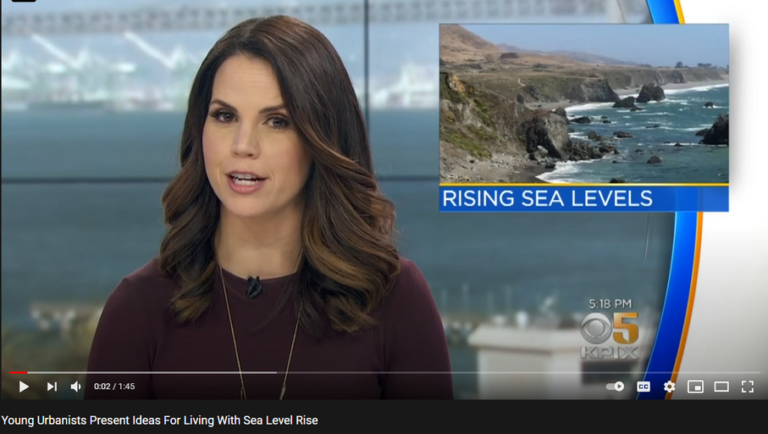
This is a segment from CBS Bay Area news that includes interviews from Y-PLAN students discussing their RBD projects
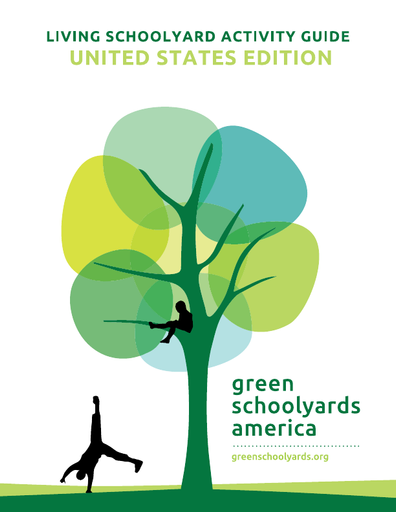
Page 79 of this activity guide is an activity for teachers and students to explore their school grounds and look for examples of resiliency as well as come up with ways their school can be more resilient. The lesson plan uses fundamental aspects of the Y-PLAN methodology like working with young people and allowing them…
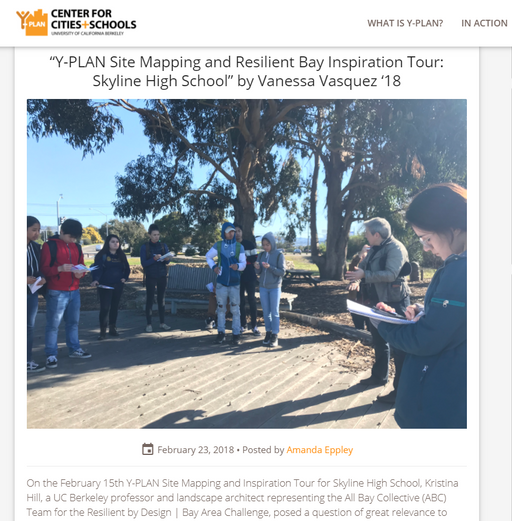
What is natural and what is artificial? If they, as an agile group of teenagers, struggle to cross a busy street, what would their younger siblings do? If sea level rise claims part of their city’s land, who will suffer first? Read about the way Skyline High School Y-PLAN students grappled with these questions and…

This article introduces the Resilient by Design competition and it’s focus on Bay Area sea level rise. It also shows the 9 regions the design teams will be working with, which are the regions Y-PLAN students also worked with in this partnership.
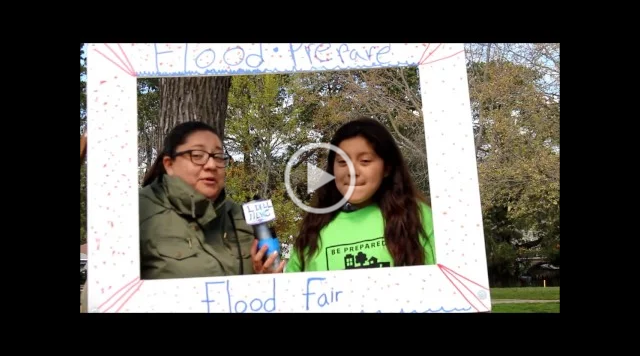
This is a video of interviews with different community members who attended the Flood Fair to learn more about sea level rise and community resilience.
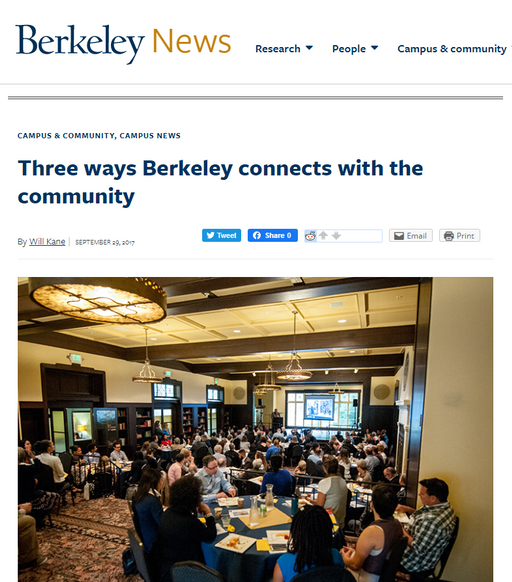
Y-PLAN received an award from the UCB Chancellor for their partnership with the African American Male Achievement Initiative in OUSD.
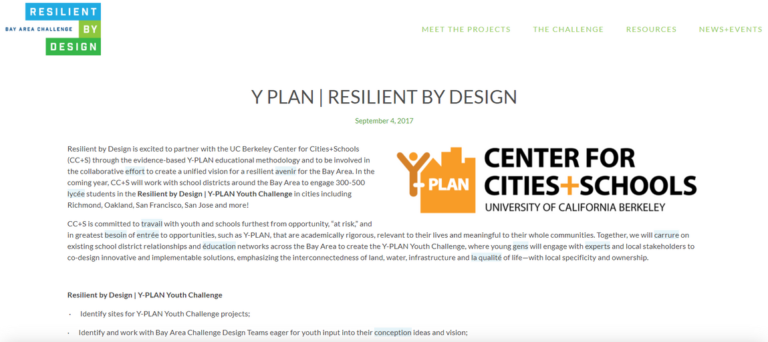
This blog was written by Resilient by Design describing their exciting partnership with Y-PLAN. “Resilient by Design is excited to partner with the UC Berkeley Center for Cities+Schools (CC+S) through the evidence-based Y-PLAN educational methodology and to be involved in the collaborative effort to create a unified vision for a resilient future for the Bay…
This is an essay by a student in Occidental College who researched effective ways of including youth in the city planning process. The student used Y-PLAN as a case study, researching the effect Y-PLAN has had in fostering youth involvement in Richmond, CA.
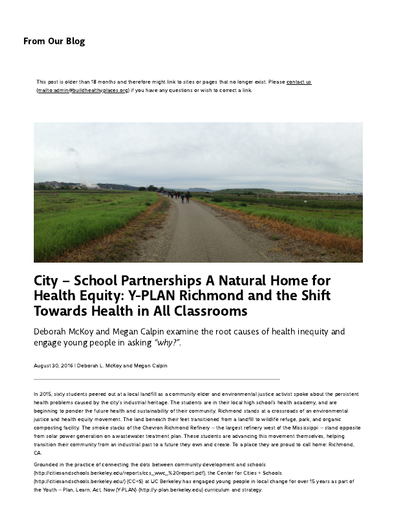
This article is about the partnership between Y-PLAN and the City of Richmond. Explaining their long partnership and the mutually beneficial relationship they have has engaging youth in Richmond’s planning process.
This field report describes how high school students from Richmond, California used an innovative educational strategy called Y-PLAN (Youth – Plan, Learn, Act, Now) to actively participate in the planning and transformation of their school, neighborhoods and city. Our description follows students through the five-step YPLAN process, highlighting how they effectively challenged the ways in…
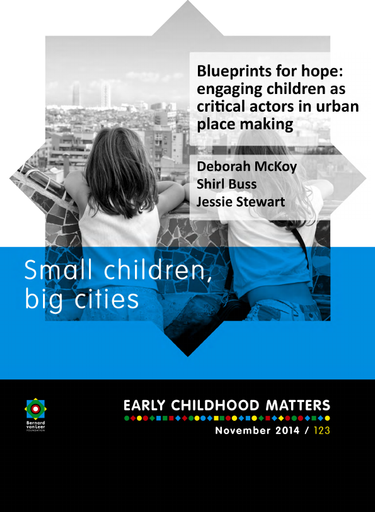
Third- and fourth-grade elementary school students have been contributing their ideas to the redevelopment of their community in San Francisco, using a methodology known as Y-PLAN (Youth-PlanLearn-Act, Now!). This article explains the process and describes the ideas the children have come up with – and how key areas and insights are being incorporated into the…
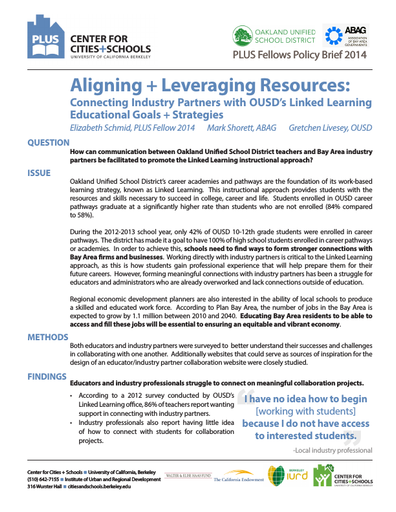
OUSD’s career academies and pathways are the foundation of its work-based learning strategy, known as Linked Learning. This instructional approach provides students with the resources and skills necessary to succeed in college, career and life. But according to this report, educators and industry professionals struggle to connect on meaningful collaboration projects

Work-based learning (WBL), an important part of the 1990s “School to Work” movement, is a core component of the Linked Learning strategy which is now shaping efforts to improve secondary education in California2 and around the nation in cities such as Detroit, New York and Philadelphia. WBL can include not only classic internships and “co-op”…
CC+S chapter in the book Changing Places: How Communities Will Improve the Health of Boys of Color (edited by Christopher Edley, Jr. and Jorge Ruiz de Velasco; University of California Press 2010). The book draws attention to the urgent need— both economic and moral—to better understand the policy and community- based factors that serve as…
Through connections with local communities of practice as well as development professionals and other adult actors, HOPE SF can improve the prospects for affiliated youth.
Many schools offer service learning—community service linked to classroom studies—to help students become more effective participants in a democratic society. Different forms of service learning combine various amounts of discussion and analysis of social issues with engagement in activities that have real impact outside the classroom. What we call “Social Enterprise for Learning,” or SEfL,…
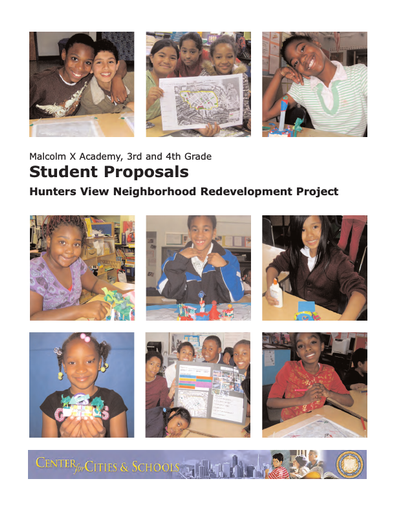
How can the Hunters View HOPE SF housing revitalization project respond to the special needs of children and youth? This is the question explored by 3rd and 4th grade students in Mr. Moore and Ms. Fredrikson’s classes at Malcolm X Academy. Working with the Center for Cities + Schools and the San Francisco Chapter of…
End of content
End of content